
EV battery tray welding cell — aluminum 5083, 0.2 mm flatness
Robot MIG cell for aluminum EV battery trays with vision-guided seam start and a post-weld dimensional gate.
- Client
- Confidential — EV Drivetrain
- Location
- Kentucky, USA
- Capabilities
- Robotics Integration · Process Engineering
The challenge
Customer was launching a new EV battery tray in aluminum 5083 with flatness requirement of 0.2 mm and a 120-second cycle. Manual MIG could not consistently hit dimensional spec on the thin walls.
What we built
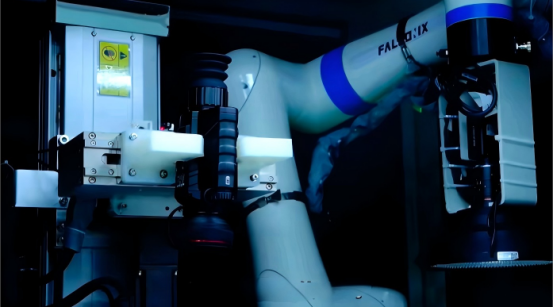
Fronius CMT pulse welding on a Yaskawa MA2010 arm. Vision-guided seam start with a Photoneo 3D camera compensates for stamping variation. Welded tray transfers to a Zeiss handheld arm CMM gate before unload.
Key equipment
- Yaskawa MA2010
- Fronius TPS 500i CMT
- Photoneo MotionCam-3D
- Zeiss Atos Q reference
From the floor
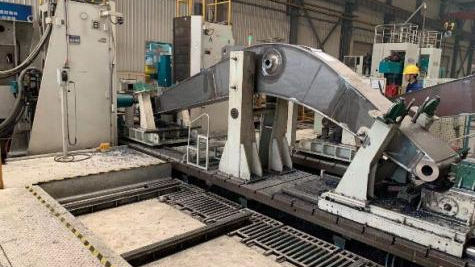
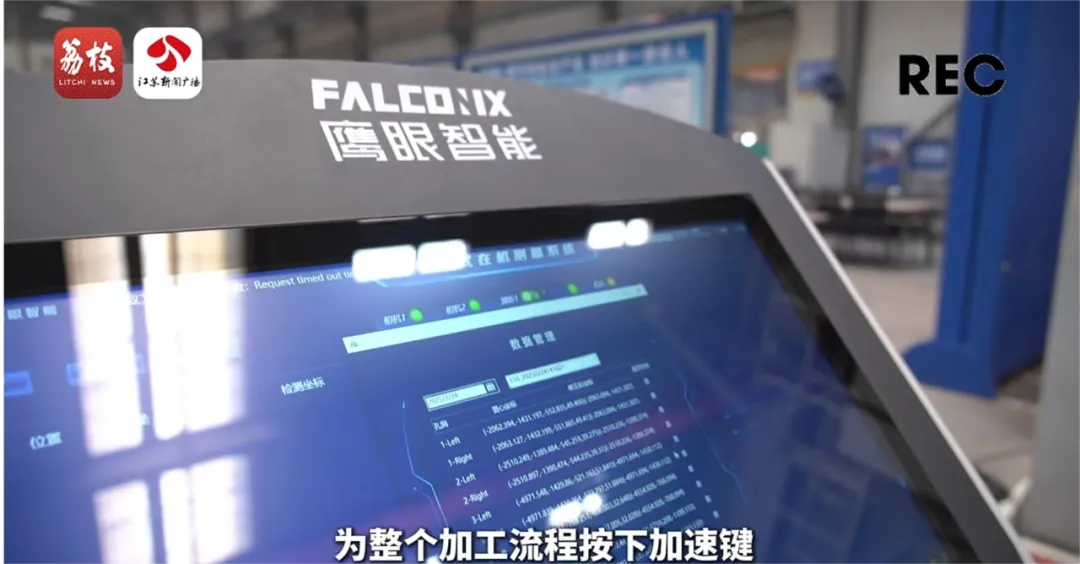
Illustrative image — representative of project scope; customer-identifying details have been removed.
Results
Cell holds 0.2 mm flatness across 50-tray verification batches at 118 s average cycle. Program is in serial production.
See all 20 projects
 Automotive•2024
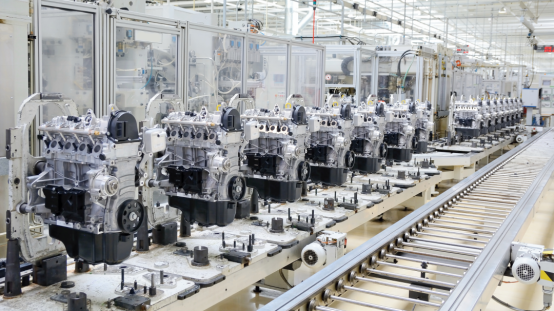
Tier-1 EGR cooler assembly line — 60 ppm, full traceability
Cell-based assembly with leak test, servo press, laser marker, and per-unit data capture for IATF 16949 compliance.
60 ppmRateIATF 16949Standard100%Traceability Food & Beverage•2025
Robotic palletizing cell — 2 shifts of manual stacking eliminated
Greenfield palletizing cell at end-of-line, sized for 60 cases per minute across 12 SKUs with quick-change tooling.
2Shifts of manual stacking replaced60 cpmCases per minute16 moProjected payback Food & Beverage•2024
AI vision defect detection — escape rate cut from 0.6% to 0.04%
Replaced rule-based blob analysis with a deep-learning model for label crease, low-fill, and cap-tilt defects on PET bottles.
0.04%Customer escape rate+9%OEE points gained<200 msPer-bottle decision time